Thursday, December 10, 2015

Holiday Eating

It’s that time of year again when parties and dinners are abundant and we, as Diabetics, are challenged with eating enough, eating the right things, controlling our sugars and trying to have a good time.

What can I suggest to help?  Well, I don’t have anything new to offer that hasn’t already been put out there by someone else.  However, I can offer an example of how I handled a recent outing where there was lots of food, including sweet treats.

An old friend from my High School day hosted a Holiday Open House last weekend.  I knew before I even left the house for the party that he and his husband had baked 500 cookies for the event, let alone all the other goodies they were going to serve.  My work was going to be cut out for me.


My daughter and I arrived in the late afternoon and the assessed the “spread.”  There were chips and dip, cheese and crackers, veggies and dips, meatballs, sausage, and various other savory appetizers.  The cookie table was layered with plates of different baked goodies, each looking more delicious than the next.

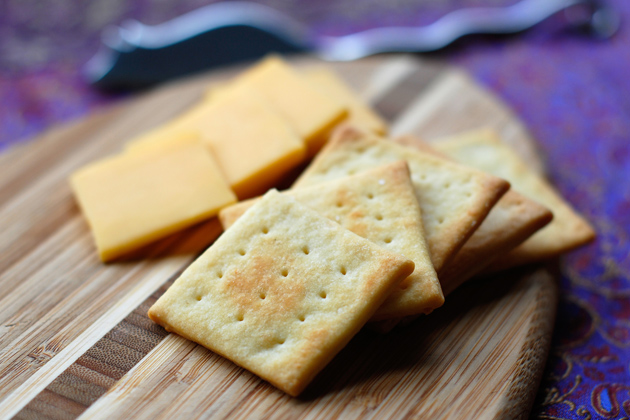
After flitting about meeting some people and watching a very youthful billiards game, my daughter and I meaningfully approached the food tables.  At first I noticed the cheese and crackers and the rum cake.  I only took a few small pieces of various cheeses and 4 crackers.  I was informed that the rum cake was extremely flammable so I just avoided it altogether.
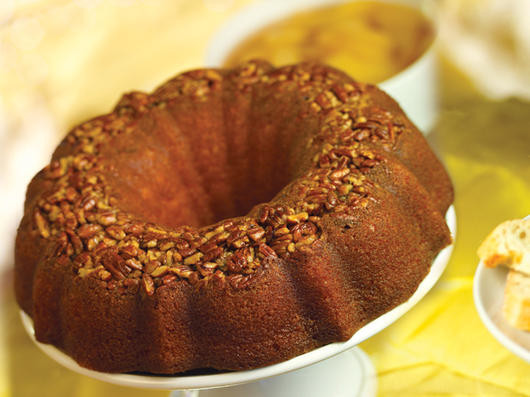
After flitting about meeting some people and watching a very youthful billiards game, my daughter and I meaningfully approached the food tables.  At first I noticed the cheese and crackers and the rum cake.  I only took a few small pieces of various cheeses and 4 crackers.  I was informed that the rum cake was extremely flammable so I just avoided it altogether.

I had some of the veggies with no dip and then a cup of spiced apple cider.  My daughter choice some things she liked, including the veggies and dip.  Once we had eaten some savories it was time to check out the cookie display.
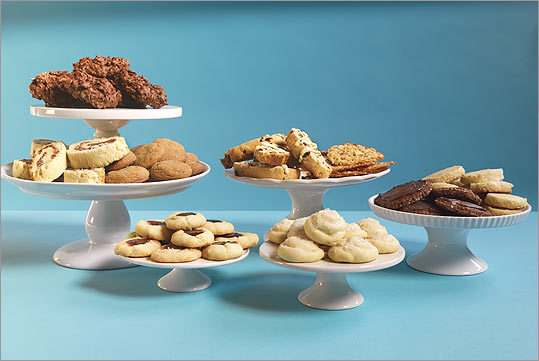
There were Chocolate Orange cookies, Russian Rock cookies, thumbprint cookies and even a gluten and dairy free option.  I took one small cookie to try at that time.  When I finished the cider, I switched completely to water for the rest of the afternoon.

I continued to try a cookie, one at a time approximately every hour.  We stayed for several hours.  I continued to go back to the savories every so often.  The baked brie and veggies were delicious as well as a quarter sandwich with beef, lettuce and tomato and a small serving of potato chips. 

Eating small amounts over the course of a few hours kept my blood sugars in pretty good shape.  Only having a sweet treat every hour or so kept me from spiking.  Overall, I felt good and had not overdone anything. 

It helped that my High School friend is also diabetic.  However, self-control is still an issue for anyone, including a diabetic.  It is difficult to be faced with such delectable temptations at a social function and keep yourself in check.  Honestly, I wanted nothing more than to eat 3 or 4 of the Russian Rock and Chocolate Orange cookies all at once.  They were so delicious!

So this holiday season, as you’re faced with temptations, like party food or big family dinners with all your favorites, remember to maintain control.  A little will go a long way for a diabetic.  Be satisfied with a taste of the sweet stuff and fill up on the healthy stuff.  Enjoying yourself doesn’t have to be a challenge or a chore.   After all, the real purpose for a holiday party or dinner is to bring people together to make memories.  I remember the people I met, the billiard game, the little baby with the sweet smile and the carols we sang around the piano much more than the food.


*Note: The pictures of food are not from the actual party I attended.

Friday, August 14, 2015

More Stress Management for Diabetics: Yogic Breath

As previously discussed in my post "Diabetics Managing Stress" stress can have a big impact on your blood sugars.  For me it's a huge factor because at times I feel like I live in a stress box that I must open and escape.  Please tell me I'm not the only one to feel this way!

My efforts to escape are most often than not successful.  Even though I mostly succeed, this up and down can have a negative impact on my health in physical ways, not just emotional or psychological.  So, as I continue on a path toward a stress free life and a life lived in harmony with my diabetes, my research into new ways to help goes on.

Yogic Breath
I have been in love with Yoga for years, an old boyfriend got me into Kundalini back in Boston in the mid-1980's.  Then in the 1990's I turned to Hatha for a while when I was dancing semi-professionally and teaching.  While both of these Yoga practices are quite different, they have one important thing in common, breath.

Almost all styles of Yoga have some element involving breath.
An inner ear problem keeps me from practicing yoga now, but the breath can be done lying down, sitting, or even standing.  I've been practicing this now and I find it's very helpful.

Simple Yogic Breath
As always, I have some links for you to places that have more information from experts.  I found a simple version of Yogic Breath from Yogic Breathing for Dummies.  This article explains a simpler form of Yogic Breath that can be a great starting place.


Full Yogic Breath
MindBodyGreen.com has a very good article on Mastering the Full Yogic Breath.  Don't let the title intimidate you.  You don't need to practice yoga to practice and benefit from Full Yogic Breath.  This article gives a simple, clear, set-by-step explanation with a few helpful pictures.  This breath is a bit more involved than the basic Yogic Breath in the Dummies article.


Pranayama
Okay, I know that the word Pranayama is probaly not in your vocabulary and you're thinking to yourself, "How is this pronounced?"  Well it's prana + yama.  It looks harder than it is.

Your next thought is undoubtedly, "What the heck is that, anyway!" The answer is a bit more complicated and requires a bit more explanation of Yoga and it's origins.  The article in Yoga Journal Breath Easy: Relax With Pranayama gives a very clear explanation of what Pranayama is, it's origins, how to practice it, and it's many benefits.

Benfits I've Experienced
You don't have to have any experience with Yoga or Yogic Breath to get some great benefits from either or both.  You may already know that the mere fact that you are doing something that does not cause stress can help you rid of some unwanted tension and anxiety.

For me, Yoga was something I practiced for body tone and control in my dancing.  I developed body awareness and knowledge through my daily practice. Eventually, I realized that it helped me to focus my mind and center my thoughts on what my body was doing. This focus gave me the confidence to push myself a bit further with each practice.

What I failed to realize for years was that my Yoga practice, which took my full focus to my body and breath, was the perfect stress relief management tool for me.  Now that I can no longer practice Yoga, the breathing techniques have become essential to my current stress management plan.

While Yoga and Yogic Breath isn't for everyone, it's worth a try.  Breathing is a natrual part of our everyday existence.  There's nothing more natural than practicing techniques with breath that can help you relax and take your mind off your troubles for a few minutes here and there.  Maybe you should give it a try!

If you decide to take a jump on the Yoga or Yogic Breathing bandwagon with me, drop me a note to let me know how it works for you.  I'd love to hear from you.  Happy Breathing! :)

Friday, August 7, 2015

Diabetic on a Budget

Now-a-days it seems that most people are worried about the time it takes to do things and how they can maximize their time.  Yet, many people are more concerned about the costs involved in living.  There will always be time to do things, but money goes such a short way now, more than it did for our parents and our parents' parents.

If you're like me and many others, you plan your budget carefully and stick to it so that nothing bounces or gets paid late.  When you live like this, buying groceries starts to become a skill or talent and to many may even be an art form in itself.  Getting the most bang for your buck is tough when milk is over $3 a gallon and ground chuck is over $6 per pound.  There is a very good reason why people joke that college students live on Ramen noodles.  You can get one pack for as little at $.15.  This means that one or two dollars can provide a noodle lunch or dinner for almost two straight weeks.

So what does this mean for a diabetic?  Well, it means that buying low-sugar or special diabetic foods can be out of your budgetary reach.

Are there some good solutions?  Yes.  If you're willing to exercise some self-control and do a little more work, you can still get your meals and snacks in each day and stay on a budget.

Be More Selective
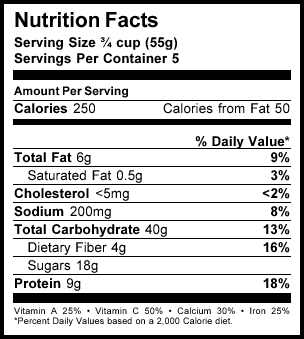
One solution to incorporate is to get foods that have more carbs or sugars and read those labels very carefully.  Check on the serving size and the total carbs, fiber and fats per serving.  Then determine how much of the product you can actually have within your diabetic guidelines.
Sometimes having smaller amounts of something is better than paying twice as much to have a little bit more of it at a time.  The regular products on the shelf, or generic/store brand products are often less expensive than brand names, even with a coupon.

This same principle goes for foods your make yourself.  Having smaller amounts when its high in fat or carbs is better than not having any.  There aren't always affordable or good alternatives for diabetics.

Cook Your Own Food
The other solution is to put in a little more work.  What I mean is that you can make more things yourself and not rely on expensive brand name and/or prepackaged foods for meals and snacks.

Some Ideas
1. Make your own snacks, rolls, breads, muffins, etc.  Granola bars and granola can be made easily enough.  Muffins and such can be made and frozen.
2. Make your meals from scratch.  Boneless, skinless chicken breast in a light sauce with vegetables and a small amount of starch, like brown rice or potatoes, is healthier than expensive prepackaged items.  You can find some great recipes on Diabetic Living Online or Everyday Diabetic Recipes.
3. Alter favorite recipes to make them more diabetic friendly.  For instance, muffins can be made with bran flour or oatmeal for more fiber and you can try a sugar substitute or applesauce for sweetness.  The American Diabetes Association website has great recipes to try and even a meal planner. Substitution examples include agave for honey, sugar substitute for white sugar and whole grains for processed flour.  Diabetic Living online has some great ideas for flour substitutes.
4. Get lots of fresh fruits and veggies in your kitchen.  Be careful to buy smaller amounts and buy them more often so they stay fresh til you eat them, but they will usually be less expensive than buying cans or frozen.

Shop carefully for substitutes.  Don't just go out an buy a bunch of different flours or sugar substitutes.  Buy one and give it a try.  Then, when you run out, try another and see how it works.  Once you find some things that you like and can do a lot with, stick to those.

So even if you're on a budget, you can get what you need and not break the bank.  Use your noggin and be creative.  Carve out more time to plan your meals and do your own cooking.  Read labels and make plans.  Buy things you can use to create wonderful, tasty healthy dishes.  No junk food or empty calorie foods.

I bet you'll find that doing your own meal planning and cooking is fun and not that much of a chore when you see your financial picture change.  Let me know in the comments what you do to stretch your food dollars and still eat healthy.  In the words of the inimitable Julia Child, "Bon Appetit!"

Links:
http://www.diabeticlivingonline.com/diabetic-recipes
http://www.everydaydiabeticrecipes.com/
http://www.diabetes.org/?loc=bb-dorg
http://www.diabeticlivingonline.com/food-to-eat/nutrition/healthy-baking-flour-substitutes

Monday, July 27, 2015

Snacks, Snacks and More Snacks!

Some diabetics find that snacking between meals and even before bed can help equalize their blood sugar.  What you eat, when you eat and how much you eat are just as important for snacking as they are for meals.  In my post from June 15, 2015, I presented a chart for putting together meals and snacks from a book by Betty Wedman.  This is a good tool to use to help you find good snack foods to incorporate into your daily meal plans.

According to Quick & Easy Diabetic Menus, by Betty Wedman, a healthy snack for a diabetic will include either 1 starch/bread and 1 fat OR 1 fruit and 1 protein/milk.  When looking at these combinations along with a list of those foods, you can start to make up some combinations that you like.

Here are some of my favorites:

  • 4-5 fresh strawberries and 6 oz. lite vanilla yogurt
  • 1 Tbsp peanut (or other nut) butter and 1 serving of crackers
  • 1 apple (lunchbox size) and 2 oz. cheese
  • 1/2 cup unsweetened applesauce (with a few dashes of cinnamon) and 1 low fat cheese stick
  • 2 oz sliced cheese and 1 serving crackers


There are many other healthy snack options that do not follow the chart outlined by Betty Wedman in her book Quick and Easy Diabetic Menus. The American Diabetes Association has a whole bunch of great suggestions on their website.

Here are just a few:

1/4 cup cottage cheese and 1/2 cup fresh or canned fruit
3 cups light popcorn
5 cherry tomatoes and 1 Tbsp Ranch dressing
3 celery stalks and 1 Tbsp peanut butter (or other nut butter)
1/3 cup hummus and 1 cup raw veggies (your choice)


Recently I was perusing the magazine Cooking Light online and see that they have some good ideas and suggestions for Diabetics.  In their NUTRITION section they have a great list of foods for every Diabetic to have on hand, as well as information on sugar substitutes and portion sizes.  In their list of foods to have on hand are some very good choices for healthy snacking like yogurt, cheese, and fruits and veggies.

Remember to always read labels for portion sizes and carbohydrate counts/portion when looking at things like crackers, pretzels, yogurt and other packaged foods.  This information is extremely helpful in decision making.  If you're like me you will want to find foods that give you the biggest amount of food per serving (I just LOVE food!) with the least amount of carbs.

I feel, sometimes, as though living with Diabetes is a big chore, then I find a treasure trove of good information from a new source or just new information from a well-known source.  The most important thing is to continue to learn and find new ways to stay healthy.  Exercise is just as important for Diabetics as food intake so in my next blog I'll be talking about how I get exercise, when I get it, and why it's so important.  Stay tuned and stay healthy!


Thursday, June 25, 2015

Your Body’s Response to Food Intake

As we all know, everyone is different.  We look, speak, act, think and do things differently from each other.  So, it stands to reason that our bodies will react differently to things as well, such as the food we ingest. 

My body sends me various signals such as, it’s hungry, my blood sugar is low or it doesn’t tolerate a certain food.  Now, I’m not a scientist or expert, but I can tell you that when I eat too much or eat too much sugar, whether from processed sugar or carbo loaded foods, I feel sick, fatigued, or tremble and feel a bit hyper.  These are not good feelings. 

If you recall, my last post included a chart for putting together your meals and snacks.  The chart is from Quick & Easy Diabetic Menus, Betty Wedman, M.S., R.D.  The only way I’ve found to avoid the yucky feelings after I eat is to follow this chart.  (See post of June 15, 2015, Food Choices and Meal Plans)  When I eat meals and snacks following this chart, I‘m not hungry for at least 2-3 hours, I don’t have episodes of low blood sugar, and I don’t feel yucky. 

So, how do you know when your body is giving you a signal?  There are a couple things you can try.  The most important way is to simply start paying attention to how you feel during the day, especially in the time after you eat a meal or snack.  It’s about becoming self-aware.
 
The way I find most helpful is to keep a food journal.  For some, this can be a big pain in the rear, yet the information you gather about yourself is priceless.  A journal kept for a week or two will give you a sense of what’s going on in your body without journeying inside, like in that movie Fantastic Voyage.


If you track your blood sugar throughout the day, journaling can be done at the same time.  Here’s a pattern you can try for your journaling:

          Before breakfast – test sugars
          Eat breakfast - write down what you ate
          Before lunch – test blood sugars, write down how you felt after breakfast
          Eat lunch - write down what you ate
          Before dinner – test blood sugar, write down what you eat
          Eat dinner - write down how you felt after lunch

If you eat snacks between meals, like I do, simply adjust your journaling to include what the snacks are and how you feel 1-2 hours later.  If you snack before bed, make note in the morning with your blood sugar reading of how you feel before breakfast.

You will want to use a schedule that works with your daily patterns and a journal style that is comfortable for you.  I’ll put a few examples together for my next post so you can get a feel for how simple the journaling can be.  In the meantime, be good to yourself and pay attention to those strange signals from your body.

Reference my previous blog: 
http://newdiabeticlife.blogspot.com/2015/06/food-choices-and-meal-plans.html

Monday, June 15, 2015

Food Choices and Meal Plans

I know, and have known, quite a number of diabetics, including family members.  Each one has a differing view on how to eat properly with their disease.  


One friend would take his blood sugar whenever he wanted to eat then dose himself with insulin to accommodate whatever he was about to consume.  (I don’t recommend this method)


I have also found many who learn about eating as a diabetic then develop their own pattern and never change the way they eat.  One friend, a type 1 since childhood, is constantly changing what she eats based on how her body acts in processing food.  For myself, I prefer to vary what I eat and keep finding new things to try.  This gives me new or better ways to think about my food.


For instance, a book I referenced in an earlier post (Quick & Easy Diabetic Menus, Betty Wedman, M.S., R.D) has a wonderful chart that gives how many fats, starches, proteins, veggies, milk and fruits should go into your meals.


Breakfast - 350-400 calories Lunch - 450-500 calories
2 - Starch.bread 2 - Starch/bread
1-2 - Fruit 1 - Fruit
1 - low fat protein or milk 1 - Vegetable
1-2 - Fat 2-3 - Protein or 2 - Protein + 1 - Milk
1-2 - Fat


Dinner - 550-600 Calories Snacks - 100-125 Calories
2 - Starch/Bread 1 - Starch/Bread
1 - Fruit 1 - Fat
1-2 Vegetable OR
3-4 Protein 1 - Fruit
1-2 Fat 1 - Protein or Milk


Substitutions - breakfast, lunch and dinner
1 - Fruit for 1 - Starch/Bread
1 - Starch/Bread for 1 - Milk
1 - Starch/Bread for 1 - Fruit
1 - Milk for 1 - Protein
1 - Protein for 1 - Milk


Using this chart from Betty Wedman, I find my meal and snack planning is so  much easier.  It makes me feel more confident about what I’m eating each day.  When you pair this planning chart with healthy choices you will find you’re better able to control your blood sugar and, in turn, your weight.  At least that’s what I’ve found.


I used be get frustrated about eating as a diabetic, but making a few new habits with the chart above has made a big difference for me.  Take a good look at the chart and think about the foods you like and eat everyday.  You’ll probably find that there are only a few changes you need to make to your current habits to meet the parameters of the chart.  

Find the book by Betty Wedman from Amazon or other booksellers and read it.  The menus and recipes are delicious and her nutrition information is priceless.  More on nutrition in future blogs.  Take care of yourself.  There is only one you!

Find the book referenced in this blog at:
Christian Book Center: http://www.clcbookcenter.com/product.asp?sku=0809238535
Amazon: http://www.amazon.com/Quick-Diabetic-Menus-Betty-Wedman-St/dp/0809238535/ref=sr_1_1?ie=UTF8&qid=1439590312&sr=8-1&keywords=quick+and+easy+diabetic+menus
Barnes & Noble: http://www.barnesandnoble.com/w/quick-and-easy-diabetic-menus-betty-wedman-st-louis/1103661963?ean=9780809238538

Thursday, May 14, 2015

Diabetics Managing Stress


Now, don’t go thinking I’m an expert on the subjects in my posts, I research and try things on to see what works.  In fact, that’s a good idea for anyone, find out about something, give it a try and see how it goes.  Everything I write here needs to be tried on to see if it fits YOU.


Meditation:
This one is terribly hard for me, perhaps for you too.  My brain is constantly active with thoughts, ideas, music, pictures etc. running through, all the time.  Turning off everything to sit or lie down for meditation is very difficult.


Since meditation is hard for me, I have little helpful advice on how to do it and it’s benefits.  However, I can share what does work for me.  Music.  Instrumental music allows my mind to have a place to focus while I do something else, like think, or work, or sleep.  When I need focus I listen to instrumental music of various styles.  This lets my subconscious self listen, hear the nuances, and relax there while my conscious self focuses on the task at hand.  I also listen to music when trying to sleep.  Again, it keeps the active conscious mind distracted while the rest of me relaxes.


Below are some websites to look at for more information on meditation techniques:


Journaling:
As a writer, journaling is a way I can express my stressful thoughts, or non stressful.  There are many times when writing about a problem in any form relieves some of the emotional baggage attached to it.  For me release of emotion, especially the negative ones, is a big help when I’m stressed.


There is no set technique for this, at least in my opinion.  Simply find something to write on, relax and start writing whatever is on your mind.  Let your thoughts flow, go with whatever happens and write until you’re done.  There should be no time limit, no judgment and no editing.  When you’re finished put away writing.  Keep it if you want, or discard it.  It’s all up to what works for you.


Have Fun:
This is my favorite way to reduce stress or let off steam.  My daughter and I go somewhere fun or do something we both enjoy.  We talk and walk, we see a movie then talk about it.  We watch a funny tv show we both like.  Sometimes we get each other to do something the other has never done before, like eating a certain food or going to a new store (we’re girls, we like to shop!).


So, when you feel stressed, try on something new, or something old that works for you.

Friday, May 8, 2015

Long Time No Post or Where Has Life Lead Me?

Well, life takes us on journeys and we sometimes feel like we are hanging on for dear life, rather than steering the ship.  That’s been my life in the last year and a half since my last post.  I apologize for leaving the blog behind me.  You have my solemn promise to post more often.

So, where have I been in terms of my Diabetes and self-care?
I hate the answer to this question.  Honestly, I haven't taken the best care of myself since stress has been a daily companion for quite some time.  My sweet tooth is the size of the Southwest and I’m an emotional eater.  This means that when I’m emotional, my first desire is to find solace in sweet foods.  NOT a good thing for a Diabetic.  As you can imagine, my sugars and A1C went up a bit as did my weight. 

Solutions:
The first thing I’ve done to get back on track is get my food portions under control.  The second thing is to make sure there are no sweet treats that are bad, processed sugar treats like cake and cookies, in the house.  I’ve also made a point to avoid eating any bad sweet treats outside the house.  Finally, I’ve replaced all bad sweet treats with good and less sweet alternatives like lite yogurt, fresh fruit and healthy granola bars with lots of flavor and fiber, but few carbs.  These snacks are giving me a bit of sweet, without all the bad sugars and calories.

Morning Blood Sugar:
I’m checking my blood sugar once a day in the morning right now and find that it’s looking pretty good.  Type 2 Diabetics are likely to have a problem with high morning fasting blood sugar.  This has to do with hormones that work to control your sugars overnight while you sleep. 

Follow this link to a good article on the Diabetic Living website for more details on this.
http://www.diabeticlivingonline.com/monitoring/blood-sugar/how-to-lower-morning-blood-sugar?page=0

While it will take some time for the weight to come down again, my sugars look better.  This Diabetes thing is persnickety and takes a firm hand. 

Finale:
By the way, I’ve noticed is that my desire for sweets has been drastically reduced.  Also, I’m finding new, better ways to handle stress that don’t involve food, like yogic breathing and meditation.  It’s amazing how one’s health is affected by such seemingly small things. 


On this final note, I will say that I intend to post blogs weekly and will cover ideas for handling stress in several blogs.